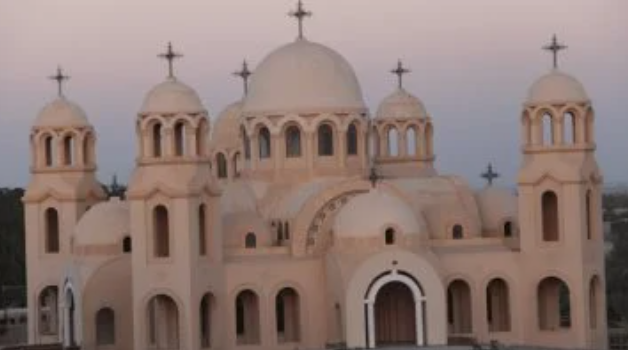
Monastery of Paramos (El Baramous)
دير البراموس
Monastery of Paramos
The Monastery of the Virgin Mary of Paramos (El Baramous) is one of the oldest and most important monasteries of the Coptic Orthodox Church. It is located in Wadi El Natrun, 12 km from the Cairo–Alexandria Desert Road. The monastery is known for its historical authenticity and spiritual depth, and is considered one of the most prominent centers of monastic life in Egypt since the early centuries.
History and Establishment
The monastery is attributed to the Virgin Mary, and is also known as the Monastery of the Romans (Deir El-Roumos) due to the presence of the cave of the princes, where the two princes Maximus and Domatius, sons of Emperor Valentinian I (364–375 CE), lived. Some sources indicate that its founding dates back to the 4th century CE during the time of Saint Macarius the Great, who established the monastic life in the wilderness of Scetis (Shihet) in 330 CE. The current monastery began as a church in the 16th century and later developed into a complete monastery.
Architecture and Components of the Monastery
The monastery covers an area of nearly two feddans and thirteen carats in the far north of Wadi El Natrun. It includes five historic churches and a library containing hundreds of rare manuscripts in multiple languages. The monastery also contains a historic fortress, a guesthouse, a bakery, and several storerooms. The towering walls surrounding it were built after the sixth Berber raid in 817 CE, reaching a height of 11 meters and a width of 2.5 meters, reflecting the monastery's defensive role during ancient times.
Saints and Spiritual Identity
The monastery is associated with a number of the Church's most prominent saints, including: Saint Mary the Virgin, Maximus and Domatius, Anba Moses the Black — a symbol of true repentance, Saint Isidore the priest of Scetis, and Saint Arsenius, the teacher of the princes. The monastery is also considered one of the Theotokos (Mother of God) monasteries established in the 6th century to resist the Julian heresy. The monastery includes two historic minarets that add to its spiritual character and the tranquility that distinguishes Wadi El Natrun.