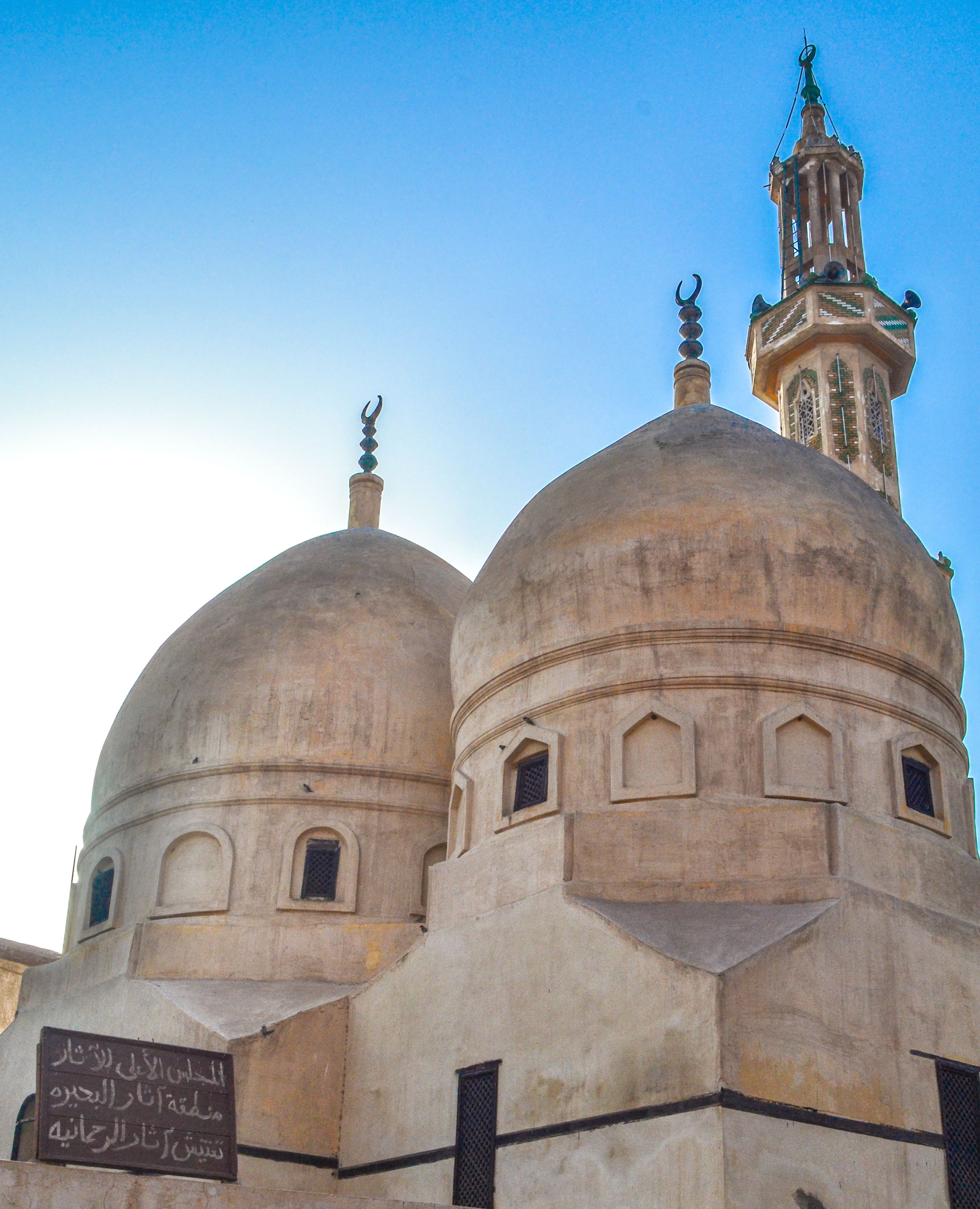
Ibn al-Nafis's Mausoleum
ضريح ابن النفيس
Ibn al-Nafis's Mausoleum
Ibn al-Nafis's Mausoleum is located in Al-Rahmaniyah city, Beheira Governorate, adjacent to a mosque of the same name. The shrine was officially discovered in 1988 through a marble plaque that identifies its construction date. The mausoleum is attributed to the great Muslim physician and scholar "Ibn al-Nafis," the discoverer of the lesser circulatory system.
History and Establishment
The dome and the mausoleum were established in 1297 AH / 1879 CE by Muhammad Agha Mahmoud. The shrine was built on an area of 3.75 meters, with wall thickness reaching 80 cm. In its center is a wooden enclosure, 2.94 meters long, containing the tomb which dates back to the end of the 13th Hijri century. This mausoleum is considered one of the most important historical pilgrimage sites, being the burial place of the Dean of Physicians of the World.
Scientific Importance
The mausoleum is located 22 km from Damanhour city, and serves as a shrine for one of the most prominent medical scholars whose works are taught in international universities such as Oxford and Cambridge. Ibn al-Nafis was famous for discovering the lesser circulatory system and developing the science of anatomy. He was also the Dean of Physicians in his time and left a scientific legacy that influenced the medical renaissance worldwide.
Location and Tourism
Despite the official registration of the shrine and mosque as Islamic monuments, the area suffers from a lack of tourist attention due to inadequate services, hotels, and proper access routes for delegations. The Al-Rahmaniyah vicinity includes a number of mausoleums of Tabi'in (successors) and philosophers. The city also witnessed prominent historical events, such as the Battle of Al-Rahmaniyah against the French Campaign. The local residents believe that the site is qualified to be an important cultural and tourist destination if highlighted more.