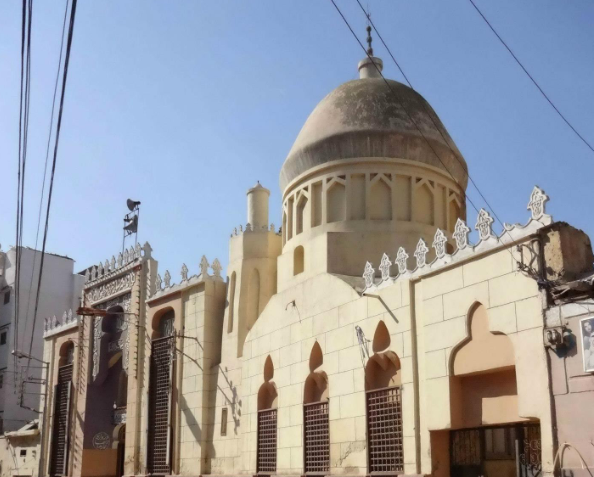
Al-Kharashi Mosque
مسجد الخراشى
Al-Kharashi Mosque
Al-Kharashi Mosque is located in Naqarha village in Damanhour city, Beheira Governorate, and is considered one of the oldest and most important mosques in the governorate. The mosque is famous for the presence of the shrine of Sidi Abd El-Muta'al Al-Kharashi, a prominent Sufi figure in the region, making it a religious and spiritual destination for the people of Beheira and its visitors.
History and Establishment
Inscriptions on the mosque's minbar (pulpit) indicate that it was established in **1300 AH / 1882 CE**. The mosque was built of red brick on a semi-rectangular area, and was later renovated during the Ottoman era, while preserving its historical features. The mosque is considered a testament to Islamic architecture in Beheira, especially with its connection to the history of the village, Sufi orders, and their pioneers.
Architectural Design
The mosque is characterized by having two entrances in the eastern and northern walls, and internally it contains four porticos parallel to the Qibla wall, formed by three rows of arcades. The ceilings rely on cylindrical columns covered with plaster. The second portico is centered by a **Shukhshaykha** (lantern/skylight) which provides natural lighting and ventilation. The mosque had a historical minaret that was demolished, leaving only its base, which still stands as a witness to its ancient architecture.
Minbar and Decorations
The mosque contains a distinctive historic minbar made of delicate Maimouni turned wood, adorned with geometric motifs and *sadaib* (wooden strips) of interlocking woodwork (*mu'aqqli*). The minbar's inscriptions include Quranic verses and the name of its craftsman, **Ahmed Aziz**, and the minbar is considered one of the most prominent artistic elements showcasing the skill of wood craftsmanship in the 19th century.