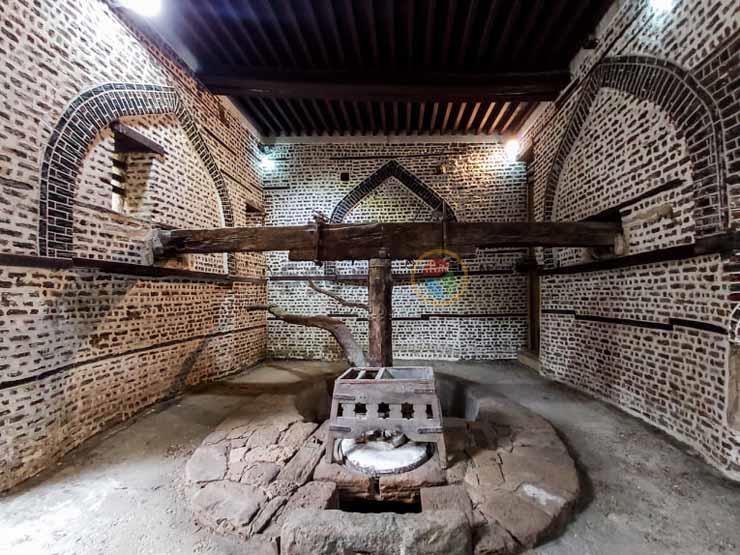
Abu Shahin Mill
طاحونة أبو شاهين
Abu Shahin Mill
Abu Shahin Mill is located on Al-Amsily Street in Rosetta (Rashid) city, Beheira Governorate. It represents one of the most important examples of mills powered by animal force in Egypt. The builder of the mill is Prince Osman Agha Al-Tobji, the Commander of Artillery in the Ottoman Army at the time.
History and Establishment
The mill was constructed in 1808 CE (the end of the 18th century CE), as part of an integrated architectural complex that includes the historic Al-Amsily House. The mill served the local population and is considered one of the oldest productive facilities in the city.
Architectural Style and Function
The mill was built using alternating red and black bricks, which gives it both aesthetic appeal and structural strength. It relied on animal power to turn the heavy grinding stones for milling grains, especially wheat, to produce flour for the city's residents.
Social and Tourist Role
The mill was not only economic; its revenue was allocated for the maintenance of a local historic mosque and to ensure the continuity of religious services. Today, the mill is a tourist and historical landmark, open to visitors to learn about the lifestyle and production methods during the Ottoman era in Rosetta city.